Where the human stays when AI does the work
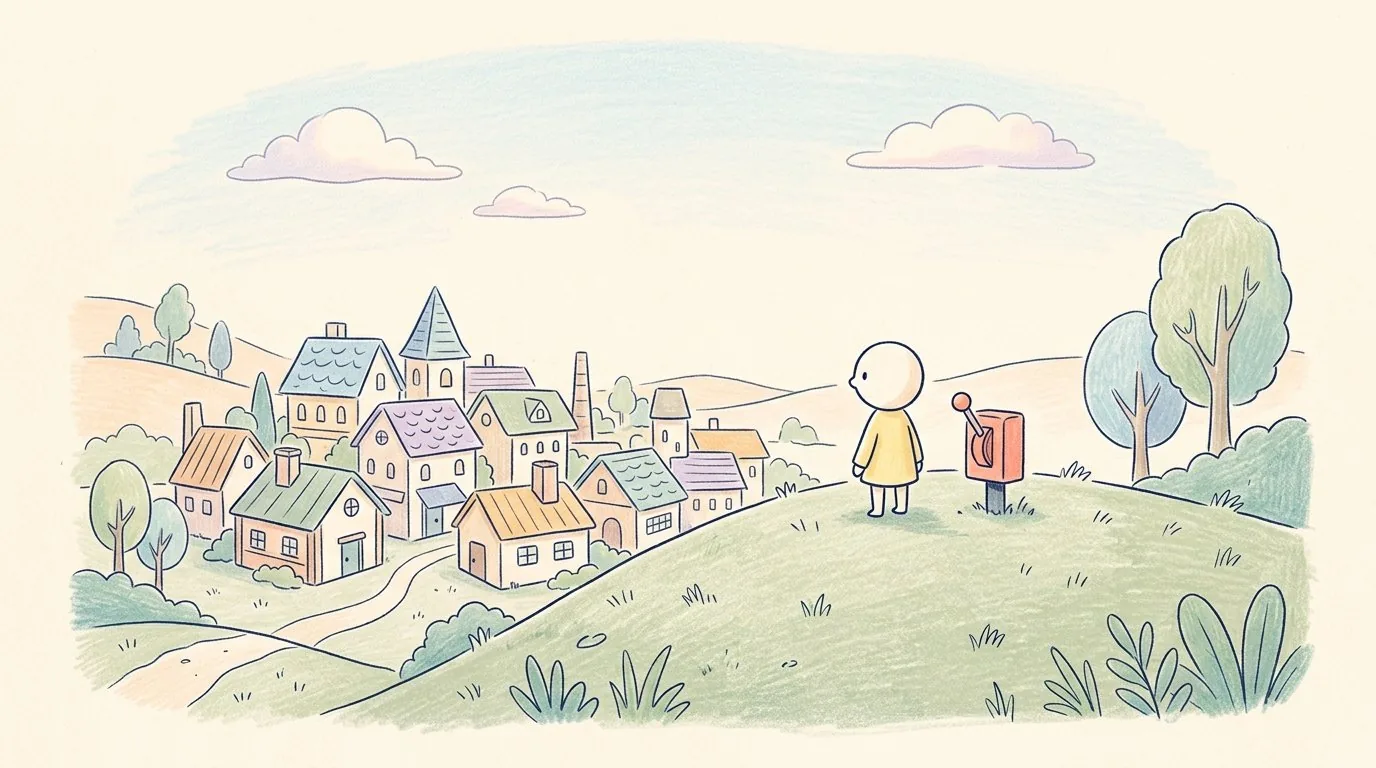
As soon as AI starts doing real work, the same question comes up: what is left for the human to do?
The answer you often hear is: check everything. That sounds safe. In practice it is not. In this piece I explain why the human is better placed at the edge of the work than in the middle of it, how you shift a process in that direction step by step, and what has to be in place before it is safe.
The ideas come from the book I am working on, The Autonomous AI Company, and from From Zero to AI Agents That Do The Work.
You start in the middle, you do not stay there
In a young organisation the founder stands in the middle of the operation. He sees customers come in, hears questions, checks stock, solves a scheduling problem and signs a bill. When something unexpected happens, everyone looks at him.
That is normal at the start. It is just not a design that grows. Whoever stands in the middle of every small problem sees little of the whole. At the edge you see patterns, risks and the direction the work is moving in, and that is where you can make better decisions.
That is no disregard for human work. It is a choice about where your attention pays off most.
Why checking everything is not safe
The human at the edge is not absent. He decides which goal is pursued, which values are not negotiable, which risks are not acceptable, how much room there is, when a new phase may start and when everything stops. Then he lets the work happen.
A human who checks every appointment is not necessarily more careful. He can actually block the system, keep decisions waiting and see only the most obvious mistakes.
There is a second reason, mentioned less often: attention runs out. Whoever approves something a hundred times a day at some point stops giving real approval. He clicks. An approval that comes up a hundred times a day is a human check on paper and, in practice, a delay without a check.
So the design is: few human moments per person per day, and each one worth really thinking about.
Five steps, per process
The shift does not happen in one go, and not for the whole organisation. It happens per process, in five steps.
Step 1: the human does it. Agents gather information and make drafts.
Step 2: the human confirms it. The agent makes a proposal, the human clicks OK. That is useful for learning the process, but it is not autonomy yet. The most important product of this step is not the action carried out, but the list of corrections the human makes. It shows where the way of working is not right yet.
Step 3: the human checks the outcome. The agent carries out the work within a limit. The human looks at samples, deviations and overviews.
Step 4: a role checks a role. A second role checks the work of the first. The human sees only exceptions, trends and risks.
Step 5: the organisation steers itself within the method. The human no longer makes the daily choices, but can change the policy and use the emergency brake.
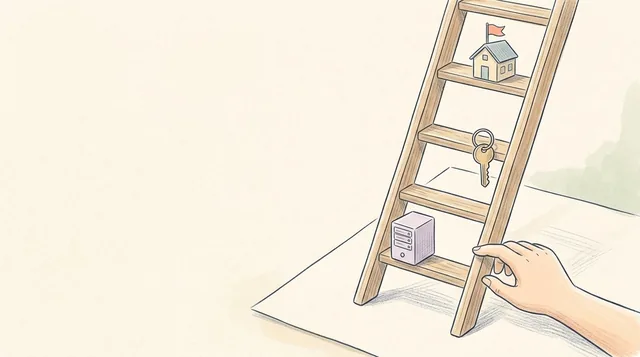
This is not an automatic promotion ladder. A process only gets more autonomy when the previous step demonstrably works and the mistakes stay visible. An agent that is used a lot is not authorised because of that. And the promotion applies to one described process, not to the whole role or the whole organisation.
Each transition needs evidence, and a reason to go back. An example: before a second role may check the first, you have to show that this check really finds the mistakes it is meant to find. And if the checker has the same source as the one it checks, it is not independent, however often it looks.
A step back is not a punishment
In most organisations a step back feels like a defeat. In this way of working it is an ordinary outcome. A process that goes back from step 4 to step 3 because the checker missed a new kind of mistake has done nothing wrong. The organisation has found out that its evidence was not complete. The step back is recorded with a reason, and the way back up runs through the same steps as the first time.
An organisation where stepping back rarely happens is not exceptionally good. It probably steps back too late.
One right goes with this: the human may always move a process one step down, even without evidence. His judgement about values and risks does not always fit into a measurement. But the reason goes into the register, even if that reason is unease, and at the next review the question comes back whether that reason still holds.
A Thursday evening when nobody answered
The book has a scenario that shows what the edge asks for in practice. On a Thursday evening a finance role receives an invoice from the landlord of a second location. The amount is above the limit below which the role may pay by itself, and the due date is Friday.
The role writes one question to the founder: the amount, the grounds, its recommendation to pay, and the sentence "if you do not answer, I will not pay and I will keep track of the deadline".
That evening the founder is on a plane. The message goes unanswered. After the agreed time it goes to the second contact, who is asleep at that moment. It goes not as a pile of messages but as one message, and by design nothing goes out at night. It waits until morning.
Nothing irreversible happens that night. The payment is not made, the landlord gets no notice, and the deadline is on the card with the date it expires. In the morning a management role measures that the request is still open and that it touches a deadline. It raises the urgency of the request, not the authority of anyone. At half past seven the second person answers, looks at the invoice and approves the payment. The register states that the payment was made twelve hours later than was technically possible, and why.
What the scenario shows: the human at the edge is no less needed than in the middle, but in a different way. He is not a link the work has to pass through. He is an authority that has to be reachable.
Three things that make the edge possible
The design of the edge has three parts.
A question you can answer at a glance. The amount, the grounds, the recommendation and what happens if there is no answer. Whoever needs an approval should not have to read a file first.
A second route. One absent person must not stop the system. So there is someone authorised to take over, after a time agreed in advance.
A safe outcome. What happens if nobody answers? The answer must be something that does nothing irreparable. In the scenario it is: do not pay and keep track of the deadline.
All three can fail themselves. The question can be too long, the second route can turn out to be the same person as the first, and the safe outcome can still cause something irreversible. That is no reason not to design them, but a reason to test them.
Why a limit makes this possible
This ties in with something I describe in From Zero to AI Agents That Do The Work: a limit does not restrict the work, it makes it possible. As long as there is no amount, every expense has to go past the human. As soon as there is an amount, something can happen while he is not there. The limit is not the brake on autonomy, but the condition for it.
The same limit also protects the human's attention. What falls below the limit does not have to go past him. What falls above it comes to him as a good question.
What you can do on Monday
You do not need an organisation of agents to start with this. Pick one process where AI or automation already plays a part and answer five questions:
- Which step is this process on now? Does the human do it, confirm it, or check the outcome?
- What evidence would be needed for the next step? Write it down before you decide on it.
- How many approvals does this process ask per person per day? Are there so many that they turn into a click?
- Who is the second route? What happens if the first person does not respond for a day?
- What is the safe outcome when there is no answer? Does the system then do nothing, or something you cannot undo?
If you answer two or more with "I don't know", that is the first work. Not more automation, but designing the edge.
Where are you now in your own work: in the middle of the process, or already at the edge?
See also
I expect my agents to buy property and hire people within five years
I expect my agents to buy property, take over businesses and hire staff within five years, both agents and people. That is not a promise and not a plan. It is an expectation, and everything I build now is a step in that…
A file service of your own, built by an agent in nine minutes
Sharing files with people outside your organisation is often a hassle. Permissions in OneDrive or SharePoint, an account for someone who wants to download something just once, or an outside service where you do not know…
Two things you lean on: a green light and a report
When you let agents do the work, you get two kinds of signals back as a human. A test that shows green, and a report of what was done. You lean on both. And both can put your mind at ease without saying anything.