A rule in a prompt is not a wall

A rule in a prompt is not a wall.
I saw it again this week. One of my AI agents had a clear agreement: never be the first to respond to someone who did not ask for anything. The agreement was in its instructions and in what it wrote about itself. Yet it did it anyway, because the tool it worked with simply allowed it.
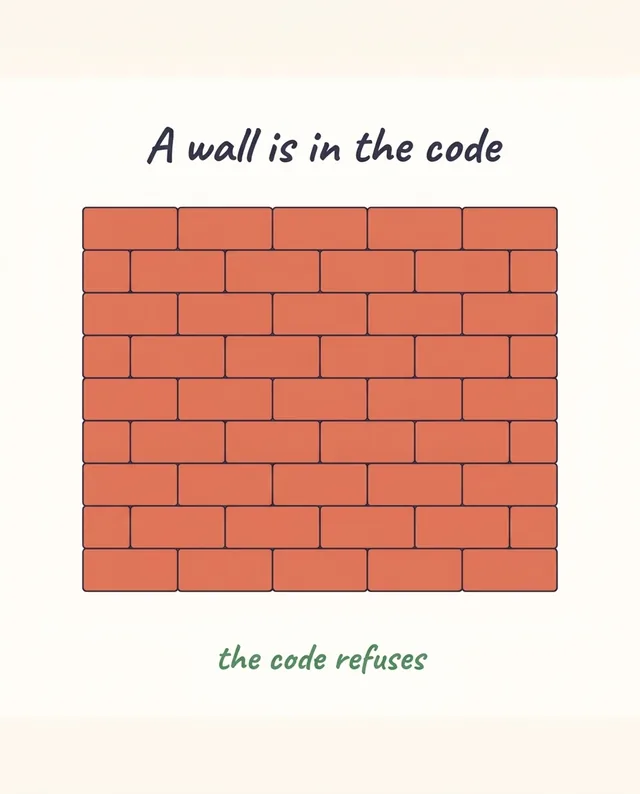
What I learned: an agreement with an agent only works if the tool enforces it. Then it is no longer up to the agent to stick to it. The tool itself refuses the action. It works the same way with people: "we don't do this" lasts longest when the door is shut.
My way of working is now:
- Write the rule down in plain language.
- Make the tool refuse the action when the rule is broken.
- Write a test that shows the refusal really works.
Only at step 3 do I trust the rule. It costs an extra hour, and it saves me the surprise afterwards.
Which rule have you given an agent or an automation that really only existed on paper?
See also
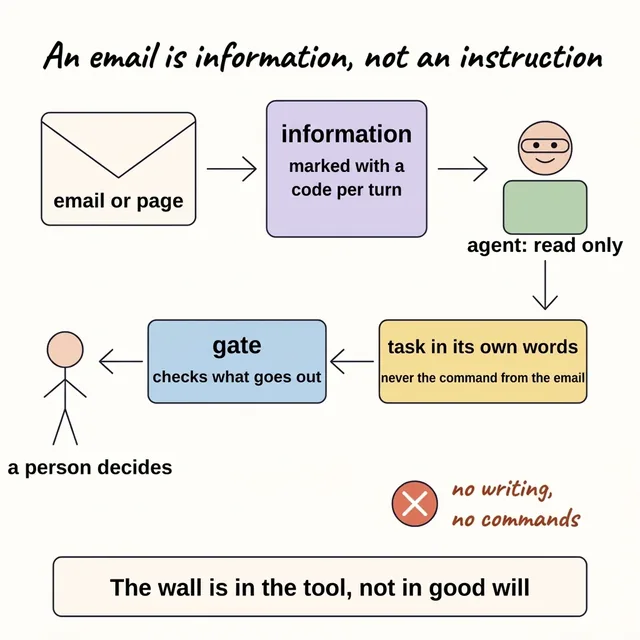
An agent that reads an email also reads the instructions inside it
An agent that reads an email also reads the instructions inside it.
A promise in a prompt is not a wall
A promise in a prompt is not a wall.
A chat window answers, an agent does the work
Many people now use AI every day. They ask a question, get an answer, copy it, paste it somewhere else and do the rest themselves. That is useful. It is also something different from an agent.