Every agent I run starts with a card
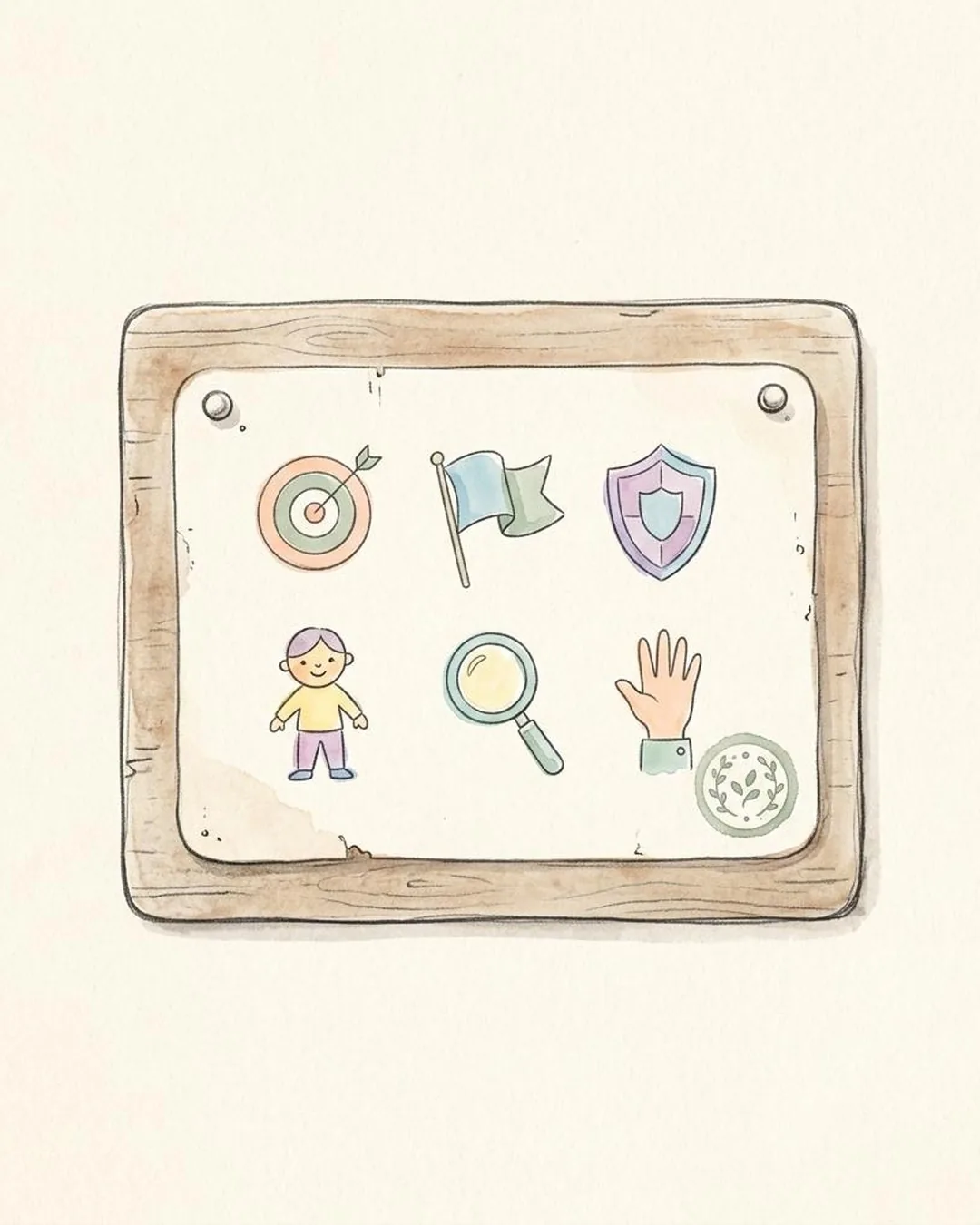
Every agent I run starts with a card.
Not with a prompt, and not with an idea of what it could do. With a role card: a short document that says who it is, what it does and where it stops.
What's on it:
The goal. One sentence: why does this role exist? If you can't say it in one sentence, it's two roles.
The result. What will exist when the work is done, and how do you tell it was done well? "A calm LinkedIn presence" is a result. "Do LinkedIn" is not.
The safeguards. What the role never does, even when someone asks nicely. No cold sales emails, no promises about money, nothing published without approval.
An owner, a reviewer and an escalation path. Who is responsible, who checks the work, and who the role turns to when it's stuck. That's three questions, and the answers are almost never the same person.
A budget. Per task, per day, and a ceiling.
Stop conditions. When the role stops and asks for help: when it's unsure whether something is within the rules, or when a source sits behind a login. And what it does then: drops the opportunity and says why.
Why I write this down instead of keeping it in my head:
An agent that doesn't know where it stops doesn't stop. It fills the gap with a reasonable guess, and a reasonable guess is exactly what you can't trace later.
It also forces me to think before I hand something off. If you can't write down the result, you can't check it either. And if the reviewer is the same person as the owner, you don't have a review, just a second look through the same eyes.
The third benefit is that it's a card: plain text. You can read it, compare it with another role, change it, and have someone who doesn't do the work read it over. That last part is why it works in an organisation and not just in a hobby project.
You don't need to build much. A half-page document with six headings is enough to start tomorrow. Begin with the role you hand the most to right now, and write the stop conditions first. They're the hardest, and they show you fastest what you hadn't thought through yet.
How do you record what an agent or an automation may and may not do? In a document, in a prompt, or mostly in your head?
#AIagents #AI #Workflows #Organisation
See also
My audiobook costs 1 euro for the next few days
My audiobook costs 1 euro for the next few days.
You get to know an agent by giving it a real task
You get to know an agent by giving it a real task.
A chat window answers, an agent does the work
Many people now use AI every day. They ask a question, get an answer, copy it, paste it somewhere else and do the rest themselves. That is useful. It is also something different from an agent.