An agent that makes appointments over WhatsApp

Anyone who wants to ask my organisation something sends a message or an email. Ilse, my Office Manager, reads them. She is an AI agent and she handles what comes with an appointment: answering the question, proposing a day, moving it to another open day.
An appointment looks small. But it is the first place where an agent talks to people outside my organisation, and that calls for clear agreements about what she does and does not do.
Answering with what is on the site
Ilse answers with what I have put in public myself. If someone asks about a day with me, they get that answer, in the sender's language. She makes nothing up and promises nothing else.
Moving is allowed, deviating is not
If a day does not fit, Ilse may propose another open day within the same rules. If someone asks for something outside those rules, such as another price or a day that does not exist, it comes to me. An agent never has to decide on something I put my name under.
Who is actually writing?
A message that says it comes from me is, for Ilse, first of all just a message. A number or address only counts as mine once it is proven. If someone says "I am Floris with a new number", nothing happens on that word. That is not distrust of people. It is what an agent must do when anyone can reach it.
Limits on the pace
An agent that always answers can also be flooded. So there are limits per sender and per hour. After that comes a short, fixed reply, and then nothing. That protects the agent, and the costs.
What you can take from this
If you want an agent to make appointments, start like this:
- Let it answer only with what you have already made public.
- Describe which days it may move and which not.
- Send everything outside those rules to a human.
- Let a sender prove who they are before they get an exception.
- Set a limit on the number of messages per sender.
I describe this in my book Het autonome AI-bedrijf, and I apply it myself every day.
Which appointments in your organisation follow a fixed rule, and which need a human? I am happy to look at that with your team for a day, in an Expert Day.
See also
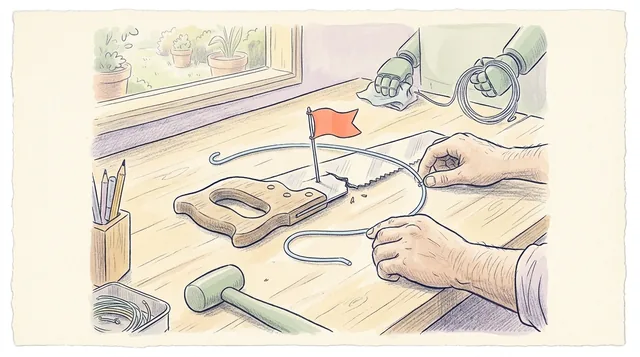
A workaround hides the error
A workaround hides the error.
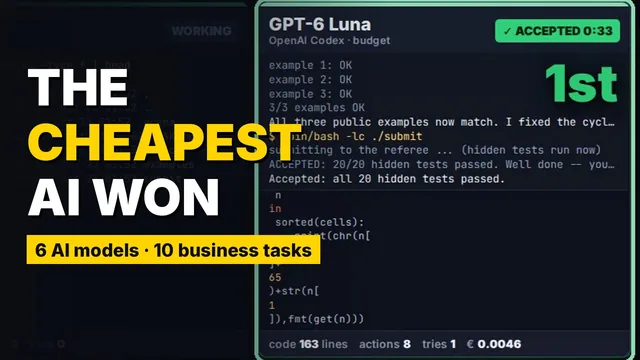
Six AI models, ten business tasks: why the cheapest one won
For one night I had six AI models compete on work that every company knows. This is the full report: the setup, the rules, how each round went, the results on speed and on cost, what went wrong, and what we are doing…
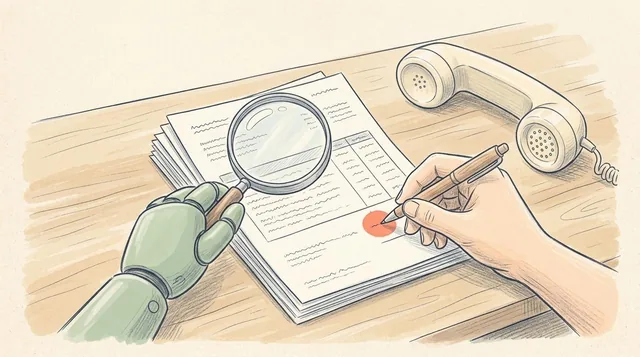
The invoice with a new bank account number: what an agent may do and what it may not
Picture the accounts payable department of a wholesaler. Nine people, around six thousand invoices a month. Most arrive by email as PDFs, the rest through a structured link. For every invoice someone has to answer the…